Table of Contents
ToggleWhen it comes to baby-led weaning, parents often find themselves on a quest for the ultimate finger foods. Enter iron-rich options, the superheroes of the baby food world. Not only do these foods pack a nutritional punch, but they also keep tiny hands busy while making mealtime a fun adventure. Who knew that broccoli could be a baby’s best friend?
Understanding Baby-Led Weaning
Baby-led weaning, or BLW, allows infants to explore solid foods independently. It encourages self-feeding, helping babies develop fine motor skills. Babies can choose what to eat, promoting autonomy during mealtimes. They often enjoy a variety of flavors and textures through this approach.
Supporting healthy development is vital, especially with iron-rich foods. Iron plays a crucial role in growth and brain development. Sources such as cooked meats, beans, and fortified cereals provide essential nutrients. Offering iron-rich finger foods, like soft strips of chicken or cooked lentils, ensures proper nutrition.
Important aspects of baby-led weaning include safety and readiness. Parents should wait until babies can sit up independently and show interest in food. Introducing iron-rich options earlier helps prevent iron deficiency anemia, common among infants. A variety of choices, such as small pieces of spinach and sweet potato, keeps mealtime engaging.
Observing babies during mealtime allows parents to identify preferences. They may express excitement over certain foods, such as broccoli, which can surprise caregivers. This exploration encourages learning about food and its textures.
Establishing positive eating habits early leads to long-term health benefits. Encouragement and patience foster an enjoyable experience at the table. As babies navigate new foods, the BLW approach can reinforce their independence and make nutrition an exciting journey.
Importance of Iron in Baby’s Diet
Iron plays a crucial role in an infant’s diet, contributing to essential growth and development. This mineral supports brain function, energy levels, and the immune system.
Developmental Benefits
Growth relies heavily on adequate iron intake. Babies experience rapid physical growth during the first year, requiring significant iron for muscle and brain development. Cognitive functions also depend on iron; deficiencies can impair concentration and learning. Encouraging exploration of iron-rich foods through baby-led weaning fosters curiosity and adventurous eating habits. The act of self-feeding strengthens fine motor skills, allowing infants to grasp, pinch, and manipulate food.
Recommended Daily Intake
For babies aged 7 to 12 months, the recommended daily intake of iron is 11 mg. This amount supports their increased nutritional needs during a period of rapid growth. Foods such as pureed meats, beans, and fortified cereals deliver essential iron. Parents should aim to incorporate a variety of iron sources into their baby’s diet. Mixing high-iron foods with vitamin C-rich options, like sweet potatoes or fruits, enhances iron absorption.
Iron-Rich Finger Foods
Iron-rich finger foods play a significant role in baby-led weaning, ensuring little ones receive necessary nutrients for growth and development. A variety of options exist to keep mealtimes interesting.
Fruits and Vegetables
Sweet potatoes offer a nutritious option high in iron, making them easy for babies to grasp. Spinach provides another great choice; boiling or sautéing enhances tenderness and flavor. Peas and avocados can also be cut into bite-sized pieces. These foods not only promote healthy iron levels but also introduce young eaters to a range of textures and tastes. Mixing fruits like peaches or strawberries with spinach boosts iron absorption due to their vitamin C content. Parents encourage exploration by presenting these colorful foods, fostering enthusiasm during meals.
Proteins and Grains
Cooked chicken, turkey, and beef serve as excellent protein sources packed with iron. Tofu and beans, especially lentils and black beans, give plant-based alternatives. Introducing these proteins in small, manageable pieces helps babies practice self-feeding. Iron-fortified cereals offer another viable option; parents can serve these in small clusters. Combining grains like oatmeal with fruits creates a tasty and nutritious boost. Offering variety ensures a well-rounded intake of iron, supporting the baby’s growing needs.
Dairy Options
Dairy products can complement iron intake effectively. Plain yogurt and cottage cheese provide protein, which supports iron absorption. Parents can add purees made from fruits or vegetables to yogurt, increasing its nutritional value. Cheese sticks or small cubes present another easy finger food option, delighting young tastebuds while being convenient. While dairy isn’t a primary source of iron, it enhances the overall diet when included. Parents find success by offering these dairy selections in tandem with iron-rich foods.
Tips for Implementing Baby-Led Weaning
Implementing baby-led weaning involves attention to safety and encouraging independence in self-feeding.
Safety Considerations
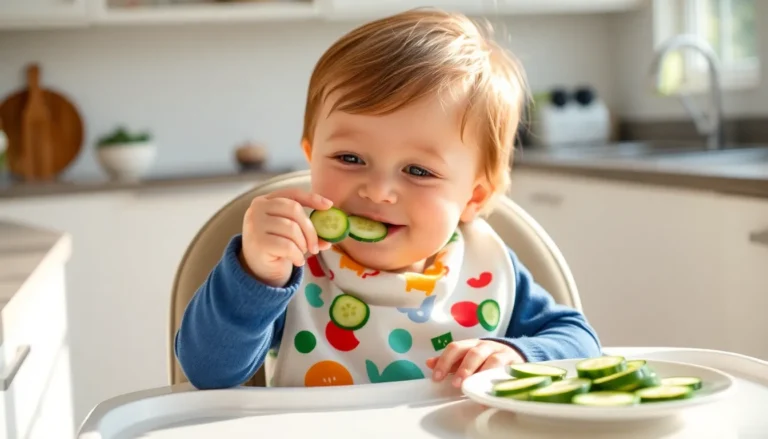
Safety is a primary concern during baby-led weaning. Parents should wait until infants can sit up independently before introducing solid foods. Choking hazards must be avoided; foods should be cut into appropriate sizes and shapes. Soft, easily mashable foods like ripe avocado or steamed sweet potato work well. Monitor babies closely during mealtime to respond promptly to any gagging or choking. It’s also crucial to ensure that babies are seated upright in a high chair. Only introduce one new food at a time to identify any allergic reactions. Establishing a safe environment fosters trust and confidence in self-feeding.
Encouraging Self-Feeding
Encouragement enhances infants’ self-feeding skills. Presenting a variety of iron-rich finger foods invites exploration and promotes autonomy. Offer small pieces of cooked chicken or tiny portions of beans for the baby to grasp and experiment with. Allowing infants to play with food supports sensory development. Engage directly by showing excitement over their choices or imitating chewing. Setting a relaxed atmosphere during mealtime helps babies feel comfortable trying new things. Celebrating small successes builds confidence, making mealtime an exciting adventure. Gradually, babies develop fine motor skills and become adept at self-feeding through consistent practice.
Monitoring Your Baby’s Iron Levels
Monitoring a baby’s iron levels becomes crucial as they transition to solid foods. Parents should schedule regular check-ups with a pediatrician to assess iron status through blood tests. Watching for signs of iron deficiency anemia is essential; symptoms can include fatigue, irritability, and poor growth.
At 7 to 12 months, the recommended daily intake for iron is 11 mg. Incorporating iron-rich foods such as cooked meats, beans, and fortified cereals into meals reinforces this requirement. Mixing these foods with vitamin C-rich options like strawberries or peaches enhances iron absorption.
Tracking dietary intake helps parents ensure their baby receives adequate iron. Keeping a food journal may assist in identifying which iron-rich finger foods are favorites and frequently consumed. Observing changes in behavior or appetite can indicate the need for adjustments in the diet.
Introducing a variety of iron sources fosters a well-rounded nutrition profile. Regular discussions with healthcare providers can clarify dietary strategies and address any concerns.
Encouragement during mealtime plays a key role in a baby’s acceptance of new foods. Celebrating successes in self-feeding builds confidence and eases anxiety around trying new options. By maintaining a variety of options, parents can support their baby’s iron levels while also making mealtime enjoyable.
Introducing iron-rich finger foods during baby-led weaning is a vital step in supporting an infant’s growth and development. By allowing babies to explore a variety of flavors and textures, parents foster independence and self-feeding skills. The right choices not only enhance mealtime enjoyment but also ensure adequate iron intake, which is crucial for brain function and overall health.
Parents should remain attentive to their baby’s preferences and readiness, creating a relaxed environment for exploration. Regular check-ups with a pediatrician can help monitor iron levels and address any dietary concerns. With encouragement and a diverse selection of nutritious options, mealtime can become a delightful journey toward healthy eating habits that last a lifetime.