Table of Contents
ToggleAs parents embark on the exciting journey of introducing solid foods, the question of readiness often looms large. Enter the Baby-Led Weaning (BLW) readiness checklist—a fun and practical tool designed to help parents navigate this delicious transition. It’s like a treasure map guiding them through the uncharted territories of mashed peas and finger foods.
Understanding BLW Readiness Checklist
Assessing readiness for Baby-Led Weaning involves several key indicators. These signals help parents determine when their child can transition to solid foods.
Firstly, a child should show interest in food. Observing them reach for food or watch others eat indicates curiosity. Secondly, demonstrating good head and neck control is essential. A child must sit up confidently and maintain stability to ensure safe eating.
Next, the development of the pincer grasp is critical. This fine motor skill allows a child to pick up small pieces of food. Coordination between hands and mouth reflects readiness as well.
Moreover, a child should double their birth weight by around six months. This milestone indicates adequate growth to handle solids. While age varies, this is a common guideline for readiness.
Parents should also notice if their child can move food to the back of the mouth independently. This ability shows they understand the chewing and swallowing process.
In addition, children should display the ability to express hunger cues. Leaning forward, opening their mouth, or reaching for food are all signs.
Lastly, observe for signs of frustration with purees. Many children prefer to explore different textures and flavors. These indicators together form a comprehensive BLW readiness checklist, guiding parents on when to introduce solids confidently.
Key Elements of the BLW Readiness Checklist
The BLW readiness checklist focuses on essential indicators for safely introducing solids. Parents should pay attention to certain developmental milestones and signs of readiness.
Developmental Milestones
A child typically shows readiness by achieving key developmental milestones. Good head and neck control often appears around six months. This ability allows babies to sit independently during mealtime. Many babies also display a strong pincer grasp, enabling them to pick up small foods. Doubling their birth weight by this age indicates adequate growth and nutritional needs. Moving food to the back of the mouth independently becomes evident, showcasing their coordination skills. Tracking these milestones helps parents gauge when to introduce solid foods confidently.
Signs of Readiness
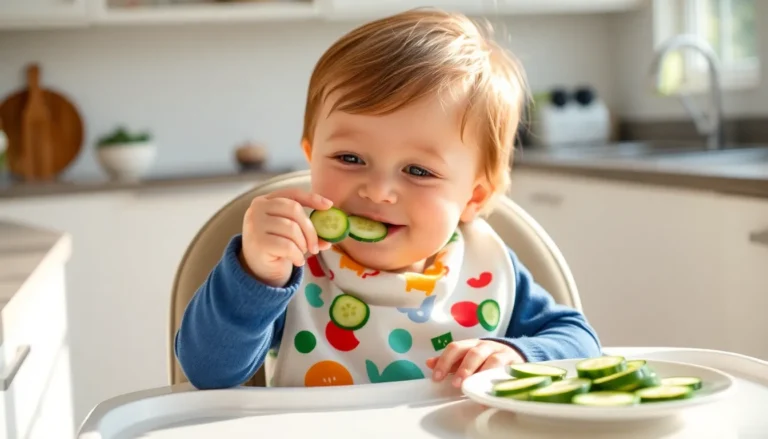
Several signs of readiness signal a baby is prepared for solid foods. Expressing interest in food often occurs during family meals. Babies may reach for food or open their mouths when offered. Hunger cues become more pronounced, showing a desire for more than milk alone. Frustration with purees can indicate a preference for the experience of self-feeding. Observing these behavioral cues ensures parents recognize the right moment to begin this new feeding journey.
Creating Your Own BLW Readiness Checklist
Building a personalized BLW readiness checklist ensures it meets specific needs. Parents can tailor indicators to fit their child’s unique development.
Essential Foods to Include
Fruits and vegetables serve as excellent starting points for BLW. Soft fruits like bananas and avocados provide nutrients and easily mash in the mouth. Steamed vegetables, such as carrots and sweet potatoes, help with texture exploration. Whole grains, including oatmeal and whole grain bread, offer fiber and healthy carbohydrates. Lean proteins like chicken and eggs can add variety and nutrients. Introducing allergenic foods such as peanut butter and fish early supports the development of tolerance. Focusing on a wide array of foods fosters interest in different flavors and textures.
Tips for Customization
Customizing the checklist requires observing your child’s specific cues. Start by noting which foods attract your baby’s attention during family meals. Adjust quantities based on their appetite and interest level. Include developmental milestones that are relevant to your child’s progress. Remove items that may not apply, such as those that do not interest them or are difficult for their skill level. Regularly revisiting and updating the checklist can enhance its effectiveness. Consult sources like pediatricians or nutritionists for expert advice tailored to your child’s needs.
Benefits of Using a BLW Readiness Checklist
A BLW readiness checklist offers numerous advantages for parents. It simplifies the process of evaluating a child’s readiness for solid foods. Parents gain confidence as they refer to the specific indicators, ensuring they don’t overlook essential signs.
Structured assessments promote a clear understanding of developmental milestones. Knowing when a child can sit independently, control their head and neck, or use a pincer grasp helps parents set appropriate expectations. Familiarity with these benchmarks supports timely introductions of solid foods.
The checklist enhances parental involvement during mealtime. A direct observation of a child’s interest in food makes the experience enjoyable for everyone. Parents can identify unique hunger cues, leading to better responsiveness to their child’s needs.
Additionally, supporting nutritious choices becomes easier with a well-defined checklist. It encourages parents to include an array of foods, from soft fruits to lean proteins. Introducing allergenic foods early aligns with expert recommendations for developing tolerance. This proactive approach minimizes potential food aversions.
Customization adds to the checklist’s effectiveness. Each checklist can reflect a child’s preferences, appetites, and progress. Regular updates ensure the tool remains relevant as the child develops. Consulting with pediatricians or nutritionists boosts the checklist’s reliability, equipping parents with expert advice tailored to their child’s requirements.
By relying on a BLW readiness checklist, parents can navigate the transition to solid foods confidently and effectively. Integrating these benefits into feeding routines sets the stage for a positive and successful baby-led weaning experience.
Utilizing a BLW readiness checklist can transform the journey of introducing solid foods into an enjoyable adventure. By focusing on key developmental milestones and signs of readiness parents can confidently assess when their child is prepared for this significant transition.
This checklist not only simplifies the evaluation process but also empowers parents to make informed decisions tailored to their child’s unique needs. With a personalized approach and expert guidance parents can foster a positive mealtime experience that encourages healthy eating habits from the start. Embracing this method sets the foundation for a successful Baby-Led Weaning journey.