Table of Contents
ToggleBaby-led weaning is more than just a trendy buzzword; it’s a culinary adventure for tiny taste testers. Imagine your little one exploring flavors and textures, wielding their food like a tiny chef in a Michelin-star kitchen. It’s messy, it’s delightful, and it might just save parents from the endless battle of spoon-feeding.
What Is Baby-Led Weaning?
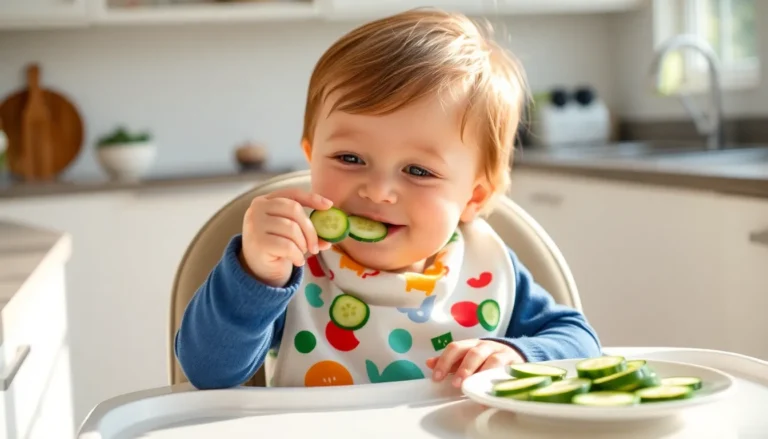
Baby-led weaning involves allowing infants to self-feed solid foods instead of relying solely on spoon-feeding. This method encourages babies to explore various flavors and textures independently. Parents often find the approach refreshing, as it reduces the mess and fuss typically associated with traditional feeding methods.
Parents introduce solid foods around six months of age, aligning with the child’s developmental readiness. Babies can grasp food pieces, bringing them to their mouths, which enhances their motor skills. Finger foods such as soft fruits, steamed vegetables, and toast are excellent choices for initial offerings.
Nutritional balance remains essential during this phase. Introducing a variety of foods ensures babies receive necessary vitamins and minerals. Foods rich in iron, such as lentils or fortified cereals, become critical due to increased dietary needs as they transition from breast milk or formula.
Safety plays a pivotal role in baby-led weaning. Parents must remain vigilant to avoid choking hazards, selecting foods that are soft and cut into manageable sizes. Guidelines suggest that supervision during meals promotes both safety and enjoyment.
Many parents appreciate the benefits of self-regulation. Babies learn to listen to their hunger cues, fostering healthy eating patterns early on. Sensory exploration through different tastes helps develop a well-rounded palate.
Ultimately, baby-led weaning empowers infants during their initial food experiences. This method nurtures confidence in eating and turns mealtime into an exciting adventure for both babies and parents.
Benefits of Baby-Led Weaning
Baby-led weaning presents several advantages for infants during their transition to solid foods.
Nutritional Advantages
Nutrition remains a priority for growing babies. By allowing infants to self-feed, parents can introduce a wider variety of foods, ensuring exposure to essential vitamins and minerals. Soft fruits, steamed vegetables, and grains contribute to a balanced diet. Iron-rich foods play a critical role in supporting healthy growth and development. As babies explore foods independently, they develop preferences, which can lead to healthier meal choices later in life. Studies indicate that this method encourages babies to consume more nutritious options compared to traditional spoon-feeding.
Developmental Benefits
Independence emerges as a key developmental benefit. Babies gain confidence as they learn to self-feed, promoting fine motor skills through grasping and bringing food to their mouths. Exploration of different textures and flavors nurtures sensory development, enhancing their ability to enjoy a wider variety of foods. Babies also begin to recognize and respond to their hunger and satiety cues, fostering self-regulation in eating habits. This approach not only supports physical growth but also establishes a positive relationship with food from an early age.
Common Concerns
Many parents express concerns about baby-led weaning. Key issues often revolve around safety and messiness during feeding.
Safety Issues
Safety stands as a primary concern with baby-led weaning. Selecting soft foods is essential, as this reduces choking hazards. Foods like ripe avocado, banana, or well-cooked carrots serve well in this approach. Parents need to cut these foods into manageable sizes to promote safe self-feeding. Vigilant supervision during mealtime is vital, allowing parents to quickly respond in case of an emergency. Additionally, familiarizing oneself with infant CPR adds peace of mind. Staying informed about safety guidelines helps create a secure eating environment.
Potential Messiness
Messiness occurs frequently with baby-led weaning, yet it’s a normal part of the process. Babies explore different textures and tastes, leading to food scattered across the high chair and floor. Cleanup provides an opportunity for families to bond while they teach babies about food. Using a large mat under the high chair may simplify cleanup efforts. Messy mealtimes play a role in sensory exploration and development. As babies learn to self-feed, they gradually become neater eaters over time.
How to Get Started
Getting started with baby-led weaning involves preparing suitable foods and introducing allergens thoughtfully. Each step contributes to a positive experience for both babies and parents.
Preparing Foods
Selecting appropriate foods marks the first step in baby-led weaning. Soft fruits like bananas and peaches work well as initial offerings. Steamed vegetables, such as carrots and broccoli, provide essential nutrients and are easy for babies to grasp. Toast cut into soldiers provides a delightful texture for self-feeding. Cooking foods until tender ensures they are safe and manageable for little ones. Parents can experiment with different flavors, keeping meals varied and nutritious. Serving family meals in a baby-friendly format reduces the need for separate preparations.
Introducing Allergens
Introducing allergens should happen gradually and with care. Starting around six months, common allergens like peanut butter, eggs, and dairy can be offered in small quantities. Each allergen should appear as a single food at first, allowing parents to monitor for any reactions. Observing for signs such as hives or digestive upset helps ensure safety. Consulting with a pediatrician before introducing potential allergens offers further guidance and reassurance. Early exposure may reduce the likelihood of allergies developing, promoting an adventurous palate as the baby grows.
Baby-Led Weaning Tips
Baby-led weaning encourages infants to explore foods independently. These tips can enhance the experience for both babies and parents.
Encouraging Self-Feeding
To foster self-feeding, serve a variety of soft, easily graspable foods. Foods like ripe avocado, steamed carrots, and soft fruits offer good options. Cut these items into appropriate sizes to prevent choking. Offer meals family-style, allowing the baby to select what they want to try. Parents should show enthusiasm to create excitement around mealtime. Gradually, babies learn to guide their own eating habits. Consistent practice helps increase their confidence in self-feeding.
Creating a Positive Mealtime Environment
Creating a positive mealtime environment encourages exploration. Set a calm, relaxed atmosphere during meals to reduce stress. Engage with the baby by talking and smiling, making the experience enjoyable. Using vibrant, colorful foods can capture their attention. Parents can also incorporate sensory elements like different textures for enhanced engagement. Allowing them to eat at their own pace fosters independence. Cleanup becomes part of the process, promoting bonding and teamwork within the family.
Baby-led weaning offers a unique way for infants to explore solid foods while developing essential skills. This method not only encourages independence but also promotes healthy eating habits from an early age. Parents can feel confident knowing they’re providing a diverse range of nutrients and fostering a positive relationship with food.
While safety and messiness are valid concerns, the benefits of baby-led weaning far outweigh the challenges. With proper preparation and supervision, mealtimes can transform into enjoyable adventures for both babies and parents. By embracing this approach, families can create lasting memories while nurturing their child’s growth and development.