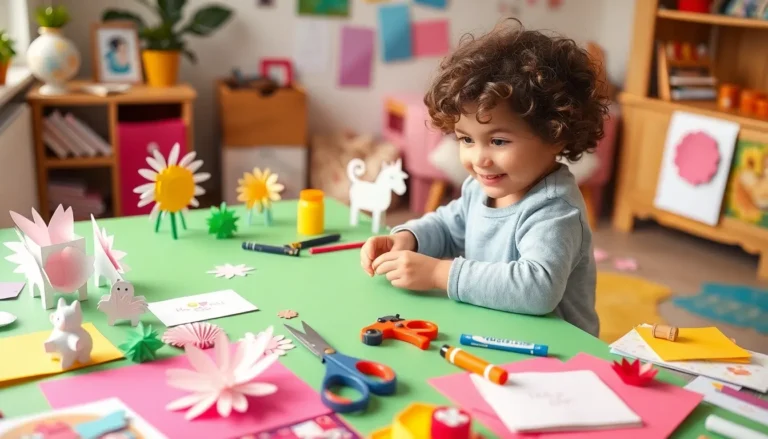
In a world where learning often feels like a chore, play-based learning swoops in like a superhero, cape flapping in the wind. Imagine a classroom where kids don’t just sit and soak up information but instead dive into adventures, explore new worlds, and tackle challenges—all while having a blast. It’s like turning education into a thrilling game, and who wouldn’t want to join the fun?
Overview of Play-Based Learning
Play-based learning serves as a powerful educational approach that integrates play into the learning process. Children engage in various activities that stimulate their curiosity and creativity. Research indicates that this method enhances cognitive, physical, and social-emotional development.
Active participation occurs when children explore their environment, solve problems, and interact with peers. The immersive nature of play cultivates critical thinking skills and fosters collaboration. Educators facilitate learning by providing resources and guidance, allowing children to direct their exploration.
Benefits of play-based learning include increased motivation and retention of knowledge. Kids often grasp complex concepts more effectively when they participate in hands-on experiences. Learning becomes self-directed as children take ownership of their educational journey.
Moreover, play-based environments encourage risk-taking and resilience. Children experiment and learn from failure, developing a growth mindset in the process. Emotional regulation also improves as they navigate social situations and conflicts during play.
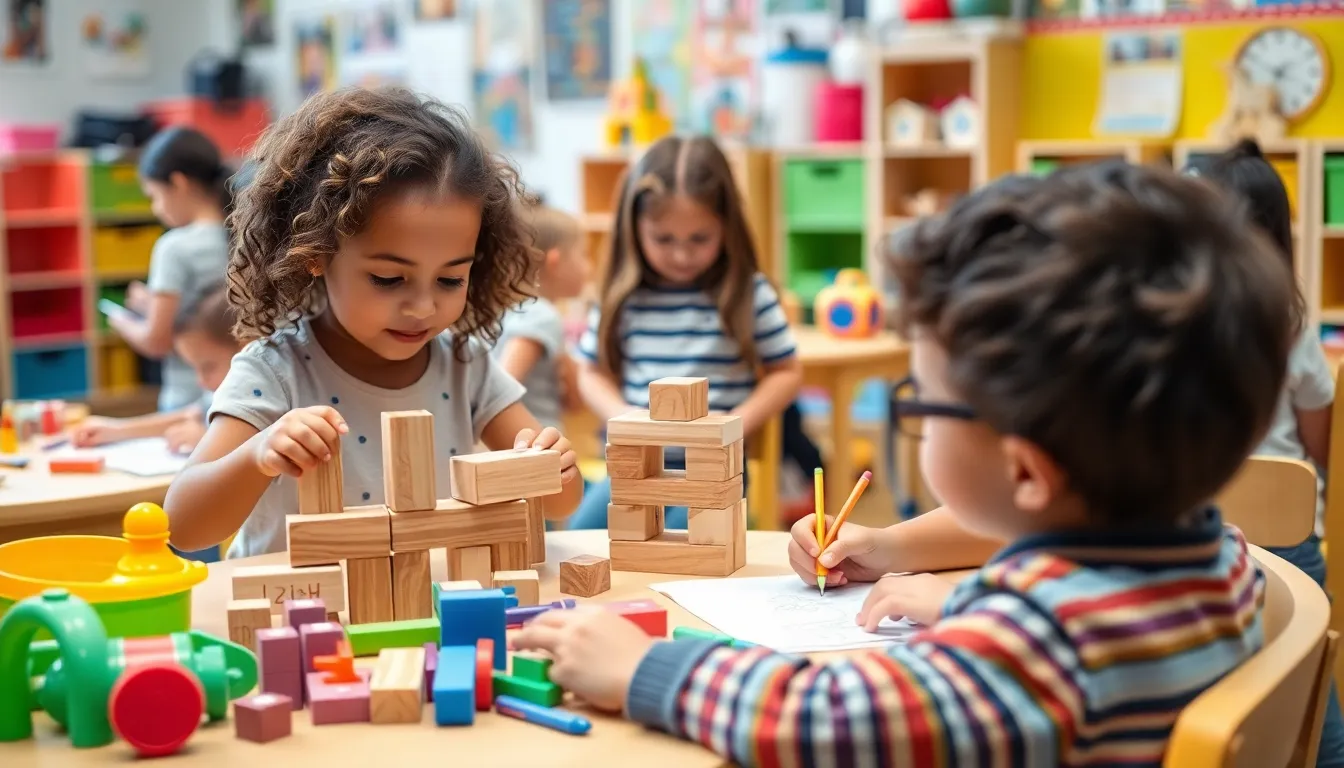
Structured play activities, such as role-playing or building with blocks, enhance teamwork and communication skills. The varied formats promote diverse methods of expression and reflection. Such environments establish a strong foundation for lifelong learning, equipping children with essential life skills.
Overall, play-based learning transforms traditional educational settings into vibrant, interactive spaces. It emphasizes the importance of learning through experience, making education enjoyable for children.
Benefits of Play-Based Learning

Play-based learning offers numerous advantages that significantly contribute to children’s development across various domains. This approach enriches their educational experience, fostering lifelong skills.
Cognitive Development
Cognitive skills develop as children engage in play-based activities. They hone problem-solving abilities through exploration and experimentation. Complex concepts become more accessible when learned through hands-on experiences. Research indicates that children improve critical thinking skills while playing. Activities like building with blocks require planning and spatial awareness, enhancing mathematical understanding. Engaging in imaginative play encourages creativity and innovation, further supporting cognitive growth. Educators, by guiding these experiences, help reinforce knowledge retention effectively.
Social Skills Enhancement
Social skills flourish within play-based environments. Group play fosters communication and cooperation among peers. Children learn to share, negotiate, and resolve conflicts while participating in collaborative activities. Structured games, such as role-playing, promote teamwork and empathy, vital skills for future interactions. As they participate in joint activities, they develop a sense of belonging and mutual respect. Frequent interactions boost self-confidence in social situations. Educators can create inclusive spaces, encouraging diverse perspectives in group play.
Emotional Growth
Emotional growth emerges through play-based learning. Children experience a range of emotions while engaging in various activities, leading to improved emotional regulation. They face challenges during play, which cultivates resilience as they learn to cope with frustration and setbacks. Engaging in creative expression allows them to communicate feelings effectively. Play encourages independence and self-discovery, fostering a strong sense of identity. Supportive educators can help children navigate emotions, enhancing their overall emotional well-being while building empathy and understanding in social contexts.
Implementation Strategies
Implementing play-based learning involves thoughtful planning and execution. Effective strategies ensure the approach meets educational goals while engaging students.
Curriculum Design
Curriculum design should integrate play as a core element. Activities must align with learning objectives, fostering skills through exploration. Thematic units can enhance engagement, weaving together subjects in meaningful ways. For instance, a unit on nature may involve outdoor exploration, sensory play, and storytelling. Resources like manipulatives and art supplies aid in reinforcing concepts. Flexibility in the curriculum allows educators to adjust activities based on children’s interests and learning pace. The aim is to create a dynamic space where play serves as a vehicle for academic growth.
Teacher Training
Teacher training plays a vital role in successful implementation. Educators must understand the principles of play-based learning and its benefits. Professional development should focus on strategies for facilitating play. Workshops that encourage collaboration and observation strengthen skills. Teachers learn to create supportive environments where children feel empowered to explore. Ongoing mentorship helps refine techniques and address challenges in the classroom. Empowering educators through training ensures consistent application of play-based learning practices, ultimately enhancing student outcomes.
Challenges in Play-Based Learning
Challenges arise in play-based learning, particularly in addressing various concerns that influence its implementation and success.
Parental Concerns
Parents often worry about the effectiveness of play-based approaches. They may question whether children acquire essential academic skills through play. Concerns also include the perceived lack of structure and direction in play-based environments. Misunderstandings about play not being serious or rigorous contribute to these worries. Some parents might favor traditional teaching styles, expecting measurable outcomes through standardized tests. Educators face the task of communicating the long-term benefits of play-based learning, emphasizing how it fosters holistic development. By sharing success stories and research findings, educators can alleviate parental concerns and build trust in the learning process.
Institutional Resistance
Institutional resistance presents significant challenges to implementing play-based learning. Many educational institutions adhere to traditional curricula, emphasizing test scores over experiential learning. This reliance on standardized assessments leads to skepticism towards play as a valid pedagogical approach. Furthermore, teachers may feel unprepared or unsupported in transitioning to a play-based model. Professional development opportunities often neglect the essential principles of play-based learning, leading to reluctance. Advocating for systemic change can address these barriers, encouraging a shift toward recognizing the value of play in education. Institutions must prioritize creating frameworks that support play-based learning alongside academic objectives.
Conclusion
Play-based learning represents a significant shift in educational practices that prioritizes engagement and exploration. By fostering an environment where children can learn through play, educators not only enhance academic skills but also promote emotional and social growth. This approach empowers children to become active participants in their learning journey.
As the educational landscape continues to evolve, embracing play-based methods can lead to more meaningful and effective learning experiences. Overcoming challenges related to parental concerns and institutional resistance is vital for widespread adoption. Ultimately, recognizing the value of play in education is essential for nurturing well-rounded individuals prepared for the complexities of the future.