In a world that sometimes feels like a competition for the last slice of pizza, teaching kindness has never been more crucial. Imagine a place where smiles are as contagious as yawns and where a compliment can turn a bad day into a great one. Kindness isn’t just a nice idea; it’s a superpower that can transform not only individual lives but entire communities.
Yet, how do we sprinkle this magic into everyday life? From toddlers to teenagers, everyone can benefit from a little kindness training. With the right approach, teaching kindness can be as easy as pie—or at least as easy as sharing that pie. So let’s explore how to cultivate this essential virtue and make the world a brighter, friendlier place, one act of kindness at a time.
Understanding Kindness
Teaching kindness plays a crucial role in shaping positive interactions within communities. Kindness nurtures empathy and respect, fostering supportive environments for everyone.
Definition of Kindness
Kindness encompasses a variety of actions that demonstrate care and consideration for others. It includes both small gestures like offering a smile and significant acts such as volunteering time for a community cause. Empathy, compassion, and respect form the core components of kindness. This definition extends beyond simple politeness, highlighting the importance of understanding and addressing the needs of others.
Importance of Teaching Kindness
Teaching kindness significantly enhances social environments for individuals and groups. Acts of kindness, like helping someone in need, foster stronger relationships and build trust. Research indicates that children who practice kindness develop better emotional regulation and resilience. They tend to create more positive classroom dynamics and contribute to collaborative learning experiences. Ultimately, instilling kindness in young people promotes a culture of support and understanding, benefiting society as a whole.
Approaches to Teaching Kindness
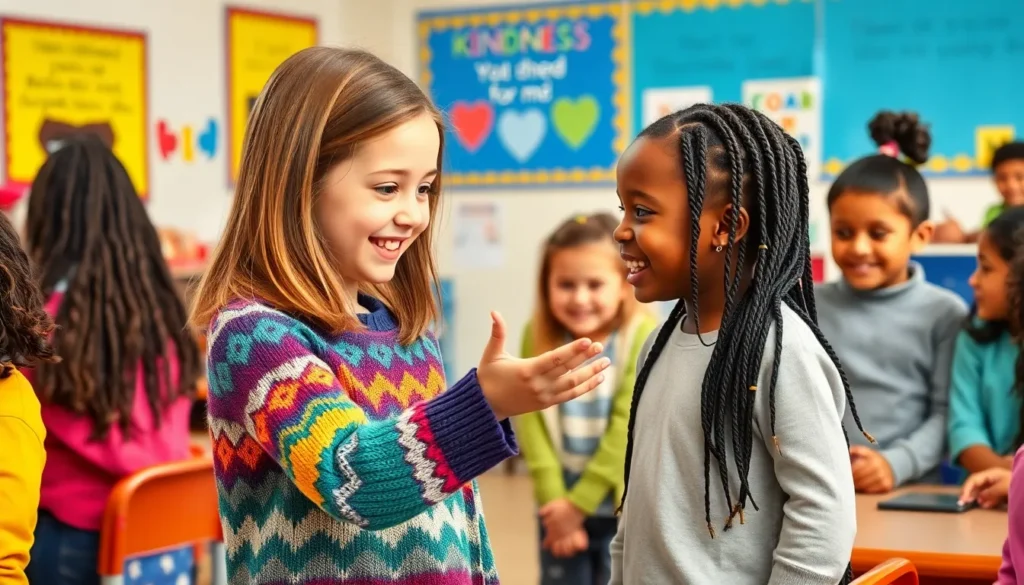
Teaching kindness can be effectively achieved through various engaging methods that resonate with individuals of all ages. These approaches foster understanding and encourage the practice of kindness in everyday situations.
Role-Playing Activities
Role-playing activities provide immersive experiences that illustrate kindness in action. Participants can take on different roles, highlighting scenarios that require empathy and support. For instance, children may act out a situation where someone feels left out, prompting others to demonstrate kindness by inviting them in. These activities promote dialogue and reflection, allowing participants to understand different perspectives. Effective role-playing encourages students to express emotions, making kindness tangible through performance. In return, students learn to recognize how their actions impact others.
Storytelling Techniques
Storytelling techniques harness the power of narratives to teach kindness. Through engaging stories, individuals can connect emotionally with characters who embody kind behaviors. For example, stories featuring protagonists who help others can inspire listeners to emulate similar acts. Crafting age-appropriate tales that highlight acts of kindness facilitates discussions among peers. Engaging storytelling encourages critical thinking about the consequences of actions and the importance of being considerate. As stories unfold, listeners can reflect on their experiences and express their thoughts about kindness in real life.
Integrating Kindness in the Curriculum
Integrating kindness into the curriculum enhances student learning and community well-being. This approach involves creative and inclusive strategies that engage learners at all levels.
Cross-Disciplinary Strategies
Cross-disciplinary strategies promote kindness across various subjects. Cooperation in group projects cultivates teamwork while teaching social skills. Science classes can incorporate discussions about environmental stewardship, linking kindness to caring for the planet. Language arts lessons can include literature that highlights themes of empathy, allowing students to explore characters’ feelings. Mathematics activities can involve charitable fundraisers, teaching students about community impact through statistical data. Such integrated activities create a holistic learning experience that values kindness in diverse contexts.
Encouraging Kindness Across Subjects
Encouraging kindness across subjects fosters a positive classroom atmosphere. During history lessons, teachers can highlight figures who advocated for humanitarian causes, inspiring students to model similar behavior. Art classes can explore projects that promote social awareness, creating visual representations of kindness themes. Physical education classes can include cooperative games emphasizing teamwork and respect. Each subject presents opportunities to illustrate that kindness isn’t confined to one area but is essential in all aspects of life. Overall, this reinforces the message that kind actions contribute meaningfully to individual and collective success.
Measuring the Impact of Teaching Kindness
Assessing the impact of teaching kindness involves various approaches. These strategies allow educators and communities to understand how kindness practices influence behavior and attitudes.
Observational Assessments
Observational assessments provide valuable insights into students’ interactions. Teachers can observe students during group activities or playground time. Noticing acts of kindness, like sharing or helping, can highlight changes in behavior. By tracking these interactions over time, educators identify patterns and growth. Specific criteria, such as frequency of kind acts or instances of conflict resolution, can quantify improvements in social skills. This method facilitates real-time feedback on students’ progress in embodying kindness.
Student Feedback and Reflections
Student feedback and reflections serve as critical tools for measuring kindness. Engaging students in discussions allows them to express their thoughts on kindness initiatives. Individual reflections via journaling or guided conversations demonstrate their understanding. Collecting this feedback helps educators gauge the effectiveness of kindness teaching methods. Through surveys or direct conversations, students articulate how kindness impacts their relationships. Such insights inform future strategies for promoting kindness in the classroom and beyond.
Conclusion
Teaching kindness isn’t just a noble endeavor; it’s essential for nurturing a compassionate society. By integrating kindness into everyday life and educational practices, individuals can create a ripple effect that fosters empathy and understanding. Engaging methods like role-playing and storytelling make the lessons memorable and impactful.
As kindness becomes a core value in communities, it enhances social interactions and builds trust among individuals. The collective effort to promote kindness not only enriches personal relationships but also contributes to a more supportive environment. Embracing kindness as a fundamental principle can transform lives and strengthen the fabric of society.