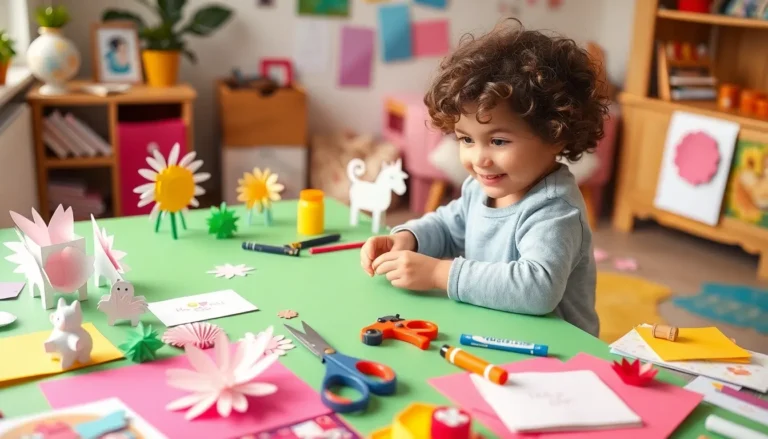
In a world filled with screens and gadgets, DIY mobiles offer a delightful escape into creativity. They’re not just for kids; adults can unleash their inner artist too! Imagine transforming everyday materials into whimsical masterpieces that dance above your head. Who knew that a few paper cutouts and some string could spark joy and nostalgia?
Overview of DIY Mobiles
DIY mobiles serve as a creative outlet for individuals of all ages. These artistic structures can transform simple materials into decorative pieces that inspire joy. They capture the imagination and can evoke nostalgia through their design.
Various materials can be utilized for crafting mobiles. Paper, fabric, wood, and recycled plastic often feature in projects. These items allow crafters to explore color, shape, and texture. They also enable the incorporation of personal themes or sentiments.
Crafting DIY mobiles includes several steps. Choose a base, such as a hoop or branch, to provide structure. Cut out shapes or elements that will hang from the base. Secure these items using string, twine, or wire. Balance the mobile by evenly distributing the weight of hanging objects.
Numerous techniques enhance the visual appeal of mobiles. Painting shapes in vibrant colors can attract attention. Adding embellishments, like beads or feathers, creates an engaging look. Layering different materials adds depth and interest.
DIY mobiles also hold practical uses. They can serve as decor for children’s rooms or nurseries. Many people hang them in living spaces to add a whimsical touch. In addition, some use mobiles as educational tools, teaching concepts like balance and movement.
Creating DIY mobiles encourages imagination and skill development. This activity enhances fine motor skills, promotes problem-solving, and fosters creativity. Engaging in this project often leads to a sense of accomplishment. Building unique mobiles can become a cherished hobby for many.
Materials Needed
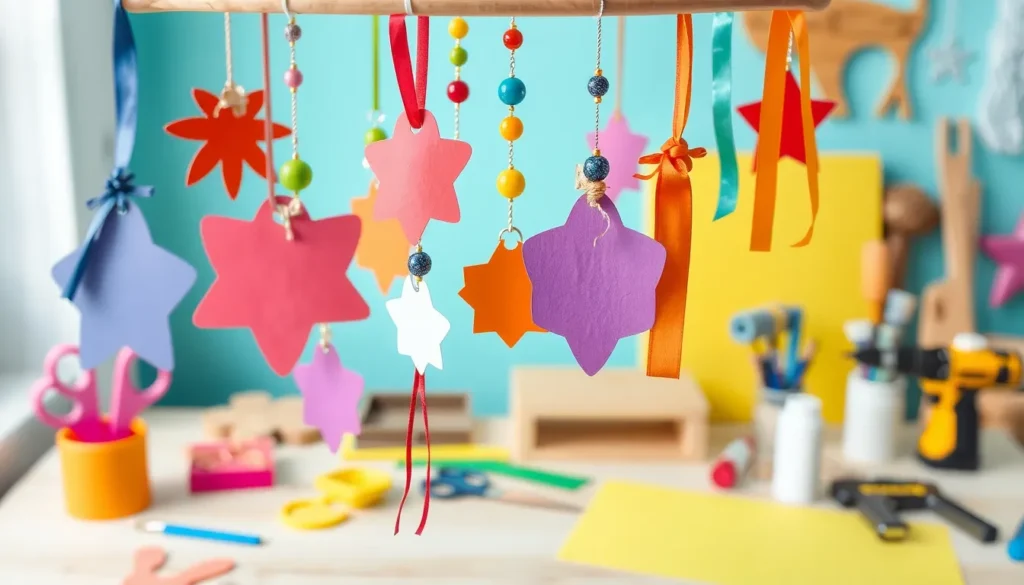
Creating a DIY mobile requires several materials that enhance both the process and the final product. Basic supplies form the foundation, while optional decorations elevate the design.
Essential Supplies
Wooden dowels act as the frame for the mobile, providing stability and support. Colorful paper or fabric serves as the main material for crafting shapes. Scissors are essential for cutting out these shapes, while glue or tape secures them in place. String or fishing line connects the shapes to the dowels, allowing them to hang and move freely. Finally, a drill may be necessary for making holes in the dowels, ensuring easy assembly.
Optional Decorations
Beads add a pop of color and texture to any mobile. Glitter enhances visual appeal and can be applied to shapes for added sparkle. Stickers offer a quick and easy way to personalize each piece. Ribbons can be tied around the dowels or used to hang the mobile, introducing softness. Painted details or embellishments also enrich the design, allowing for unique artistic expression.
Steps to Create DIY Mobiles
Creating a DIY mobile involves a few straightforward steps. Each stage contributes to the final artistic piece.
Choosing a Design
Selecting a design serves as the initial and crucial step. Inspiration can come from nature, geometric shapes, or imagination. Individual preferences guide the choice of colors, shapes, and themes. Sketching a rough outline helps visualize the final product. Variations in complexity exist, ranging from simple shapes for beginners to intricate designs for those with more experience. Utilizing online resources or craft books provides additional ideas and guidance.
Assembling the Components
Assembling components comes after finalizing the design. Begin by gathering all necessary supplies, ensuring each piece is prepared accordingly. Use scissors to cut shapes from paper or fabric based on the chosen design. Attach the shapes to a wooden dowel using glue or tape. String or fishing line acts as the suspension method for hanging the mobile. Ensure balance by adjusting the placement of shapes along the dowel. Continuous adjustments lead to a well-balanced mobile that functions and looks appealing.
Benefits of DIY Mobiles
Engaging in DIY mobiles offers numerous advantages across different age groups. Creativity thrives, allowing individuals to express their artistic talents while transforming simple materials into stunning art pieces. Crafting provides a sense of accomplishment, enhancing self-esteem and fostering a rewarding hobby.
Skill development is another significant benefit. As crafters cut, assemble, and balance components, they improve their fine motor skills and hand-eye coordination. Families can collaborate on projects, encouraging teamwork and bonding moments. Children particularly gain valuable lessons in patience, planning, and perseverance throughout the crafting process.
Educational aspects also play a crucial role. DIY mobiles can teach concepts like balance, symmetry, and movement in a fun way. Parents and educators can use them as teaching tools, making learning interactive. Colors, shapes, and textures come alive as children explore these elements through their creations.
Cost-effectiveness stands out among the advantages of DIY mobiles. Creating personalized decor or gifts often costs significantly less than store-bought items. Recycled materials enable sustainable crafting, promoting environmental awareness while embracing creativity.
Customization options abound with DIY mobiles. Each piece can reflect individual style, making them unique additions to any space. Crafters often experiment with different designs, materials, and color palettes, resulting in personalized decor that brings character to their surroundings.
Lastly, making DIY mobiles can serve as a therapeutic activity. Engaging in hands-on projects allows for relaxation and mindfulness, providing an escape from everyday stresses. The joy of crafting these mobiles extends beyond aesthetics, benefiting emotional well-being and fostering a greater appreciation for creativity.
Tips for Success
Choose a clear, simple design for the mobile to ensure it’s easy to assemble and balance. Opt for lightweight materials like paper or fabric to enhance the overall stability of the mobile. Cut shapes carefully to maintain uniformity, as this greatly impacts the visual appeal. Consider the placement of each shape; balanced arrangements create a more dynamic look.
Use a variety of colors and textures to engage the viewer’s interest. Incorporate materials such as glitter or painted details, which can add depth and uniqueness. Attach pieces securely using glue or tape for stability during movement. When assembling, ensure that string or fishing line lengths vary. This adds dimension while helping the mobile to hang naturally.
Adjustments may be necessary during assembly. Checking for balance after attaching components prevents tilting, which can detract from the mobile’s aesthetic. Experiment with different arrangements before finalizing; this can lead to a more visually pleasing outcome.
Working in a well-lit, uncluttered space helps in focusing on details. Gather all essential supplies beforehand to streamline the crafting process. Invite others to join in; working collaboratively can heighten creativity and foster connections among participants.
Resourceful use of recycled materials enhances sustainability. Exploring local craft stores or online shops offers wide selections for embellishments. Documenting the crafting process can serve as a helpful reference for future projects.
Conclusion
Creating DIY mobiles offers a fulfilling experience that transcends age. It allows individuals to unleash their creativity while transforming simple materials into beautiful art pieces. The process not only enhances artistic skills but also fosters emotional well-being through mindful engagement.
With endless possibilities for customization and design, anyone can craft a mobile that reflects their unique style. Whether for personal enjoyment or as a meaningful gift, DIY mobiles serve as a delightful reminder of the joy found in creativity. Embracing this craft can lead to cherished memories and a sense of accomplishment that resonates long after the project is complete.