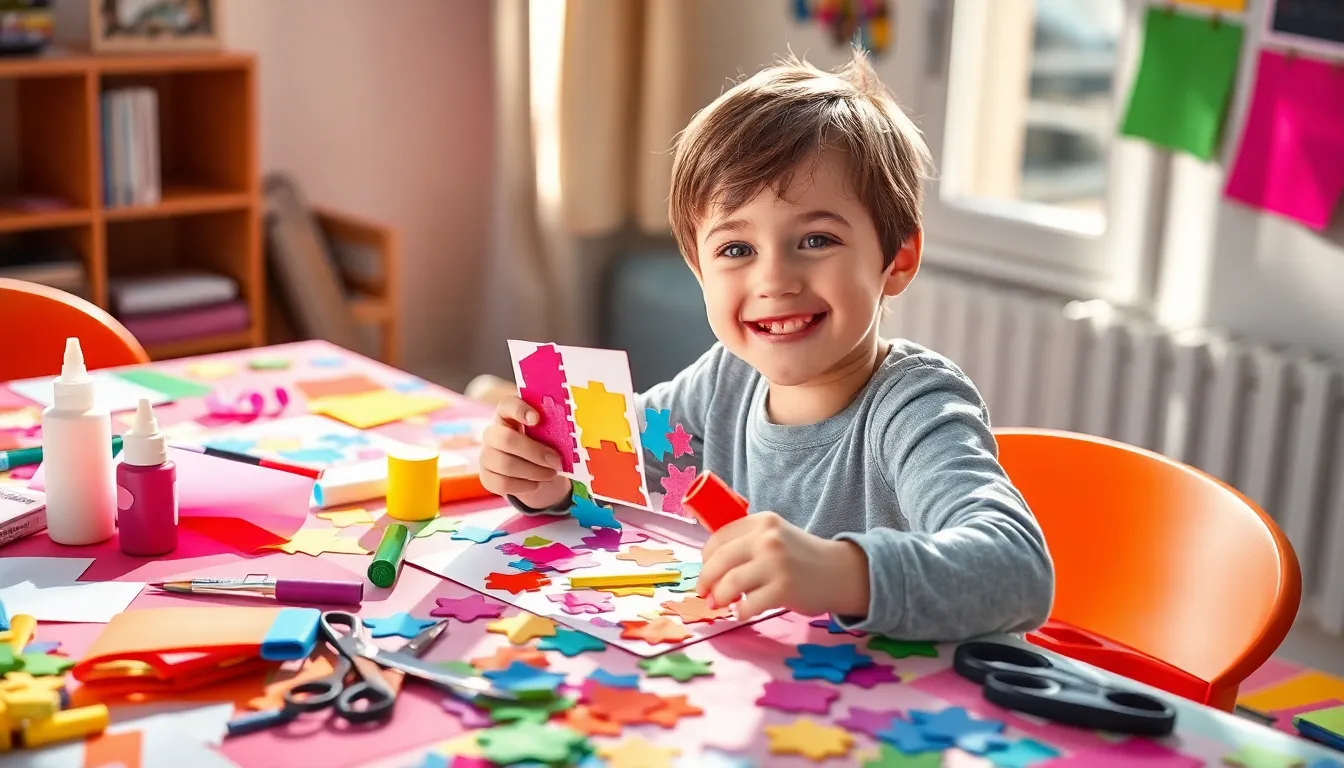
Getting kids to unleash their creativity can sometimes feel like herding cats. But with DIY arts and crafts, parents can turn that chaos into colorful masterpieces! Not only do these projects keep little hands busy, but they also spark imagination and build essential skills. Who knew that a simple paper plate could transform into a flying saucer or a glittery masterpiece?
Benefits of DIY Arts and Crafts for Kids
Engaging in DIY arts and crafts provides numerous benefits for children. Projects not only stimulate creativity but also promote essential skills that contribute to overall development.
Enhances Creativity
Participating in hands-on projects stimulates children’s imagination. They explore colors, textures, and forms while expressing unique ideas. By working with various materials, kids encounter unlimited possibilities that foster original thinking. Experimentation is encouraged, allowing them to make choices in their creations. Creating art nurtures self-expression, helping children communicate feelings and thoughts visually. Additionally, these activities play a critical role in problem-solving. Kids learn to brainstorm solutions when facing challenges in their projects.
Develops Fine Motor Skills
Craft activities significantly improve children’s fine motor skills. Manipulating small items like beads or scissors promotes hand-eye coordination. Sticking, cutting, and folding enhance dexterity and strength in young hands. Each action contributes to the development of muscle control, which is essential for writing and other daily tasks. Engaging in crafting requires concentration, further honing focus and attention spans. As children complete projects, they experience a sense of accomplishment, boosting confidence in their abilities.
Popular DIY Arts and Crafts Projects
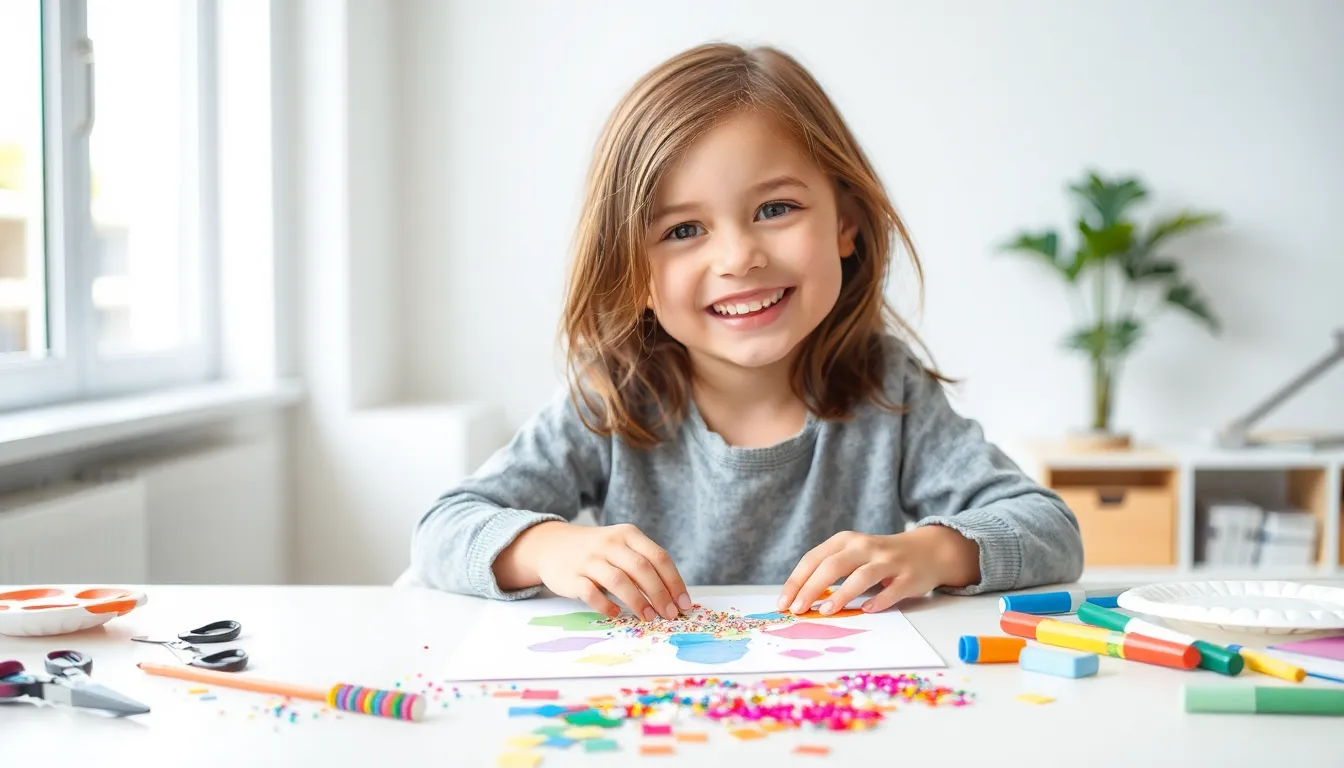
Numerous DIY arts and crafts projects engage children’s creativity while improving skills. Parents can choose from a variety of simple yet effective activities.
Paper Crafts
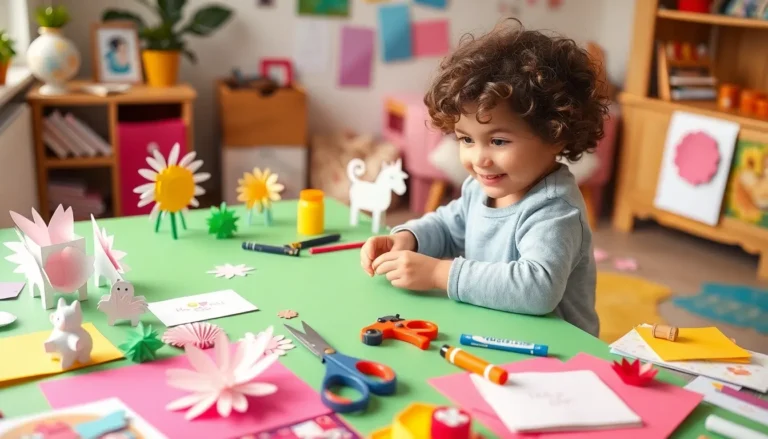
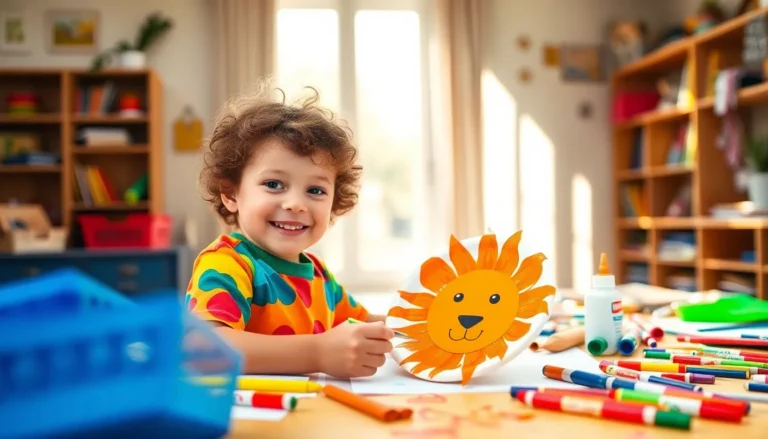
Paper crafts provide endless possibilities for creative expression. Children can create greeting cards, origami figures, or colorful collages. Using construction paper and scissors encourages fine motor skills while children cut shapes. They can explore their artistic side by decorating their creations with markers, glitter, or stickers. Basic materials like paper plates enable kids to build masks or puppets, fostering imaginative play.
Nature-Inspired Crafts
Nature-inspired crafts connect kids with the outdoors. Collecting leaves, twigs, or stones allows children to explore textures and colors found in nature. Kids can create leaf rubbings by placing paper over leaves and coloring them with crayons. They can construct bird feeders using pine cones, peanut butter, or birdseed, promoting awareness of local wildlife. Nature crafts instill appreciation for the environment while developing observational skills, making these projects both educational and fun.
Essential Materials and Tools
Selecting the right materials and tools enhances the DIY arts and crafts experience for kids. These supplies facilitate creativity and ensure safe, engaging crafting sessions.
Basic Supplies
Common supplies include paper, scissors, glue, and markers. Craft paper in various colors inspires creativity, while scissors provide children with the opportunity to practice fine motor skills. Glue sticks offer mess-free application, ideal for younger crafters. Markers allow for vibrant designs, encouraging artistic expression. Other useful items consist of tape, stickers, and string. Incorporating recycled materials, like cardboard boxes or bottle caps, fosters sustainable creativity and teaches resourcefulness.
Safety Considerations
Ensuring safety is crucial during crafting. Supervision is necessary when using sharp tools like scissors or craft knives. In addition, non-toxic materials, such as washable glue and markers, protect children’s health. Parents should check for age-appropriate supplies, avoiding small parts that might pose choking hazards. Setting up a designated crafting area minimizes mess and promotes organization. Maintaining a clean workspace further prevents accidents, allowing for a more enjoyable crafting experience.
Step-by-Step Project Ideas
This section offers two categories of DIY projects suitable for kids of different skill levels. Engaging in these creative activities fosters learning and fun.
Easy DIY Projects for Beginners
Begin with simple paper crafts that require minimal materials. Children can create greeting cards for special occasions using colored paper and markers. They can also explore origami by folding paper into fun shapes like animals or boats. Collages using cut-out images from magazines enhance creativity while allowing young artists to express themselves. Encourage them to use natural elements like leaves or twigs, integrating nature directly into their creations. These easy projects cultivate fine motor skills and boost confidence in their crafting abilities.
Advanced Crafts for Older Kids
Older kids can tackle more complex projects that challenge their creativity and skills. Building birdhouses from recycled materials invites them to apply problem-solving methods while connecting with nature. Painting canvas bags or T-shirts showcases individual artistry and allows for practical applications of their creations. Constructing a DIY dreamcatcher fosters a blend of design and manual dexterity. Kids can also experiment with mixed media, combining various textures and materials for unique artwork. These advanced crafts promote critical thinking and further enhance their artistic expression.
Tips for Encouraging Kids’ Creativity
Encouraging kids’ creativity involves creating an environment that sparks their imagination. Craft spaces and structured time are essential components.
Setting Up a Craft Space
Establishing a designated craft area makes it easy for children to access materials and focus on their projects. Parents should choose a well-lit area with ample space for movement. Providing a variety of supplies like colored paper, paint, and glue invites exploration. Parents can organize materials in bins or shelves, making cleanup simple and efficient. Keeping everything in reach empowers kids to choose what they want to work with, promoting independence. Including a large table or floor space allows for larger projects, fostering collaboration among siblings or friends. Craft spaces should also inspire creativity by displaying completed projects, serving as motivation for new ideas.
Structuring Craft Time
Structuring craft time helps kids develop routine and focus. Setting aside specific days for crafting makes creativity a regular part of their schedule. Parents should consider keeping sessions to 30 to 60 minutes, allowing children to engage without overwhelming them. Beginning each session with a brief discussion about the project can enhance excitement and understanding of the goals. Allowing open-ended exploration during crafts promotes imaginative thinking; kids can take the lead in their creations. Structuring some sessions for specific techniques or themes encourages skill development while keeping the activities diverse. Encouraging reflection on completed projects can boost confidence and excitement for future crafting adventures.
DIY arts and crafts offer a wonderful avenue for children to explore their creativity while developing essential skills. By engaging in hands-on projects, kids not only express themselves but also build confidence in their abilities. The right materials and a structured environment can significantly enhance their crafting experience.
Encouraging creativity through these activities fosters a love for learning and self-expression. Parents can support this journey by providing a safe space and allowing kids the freedom to explore their artistic ideas. As they create, children learn to problem-solve and communicate visually, laying the groundwork for a lifetime of creativity and innovation.