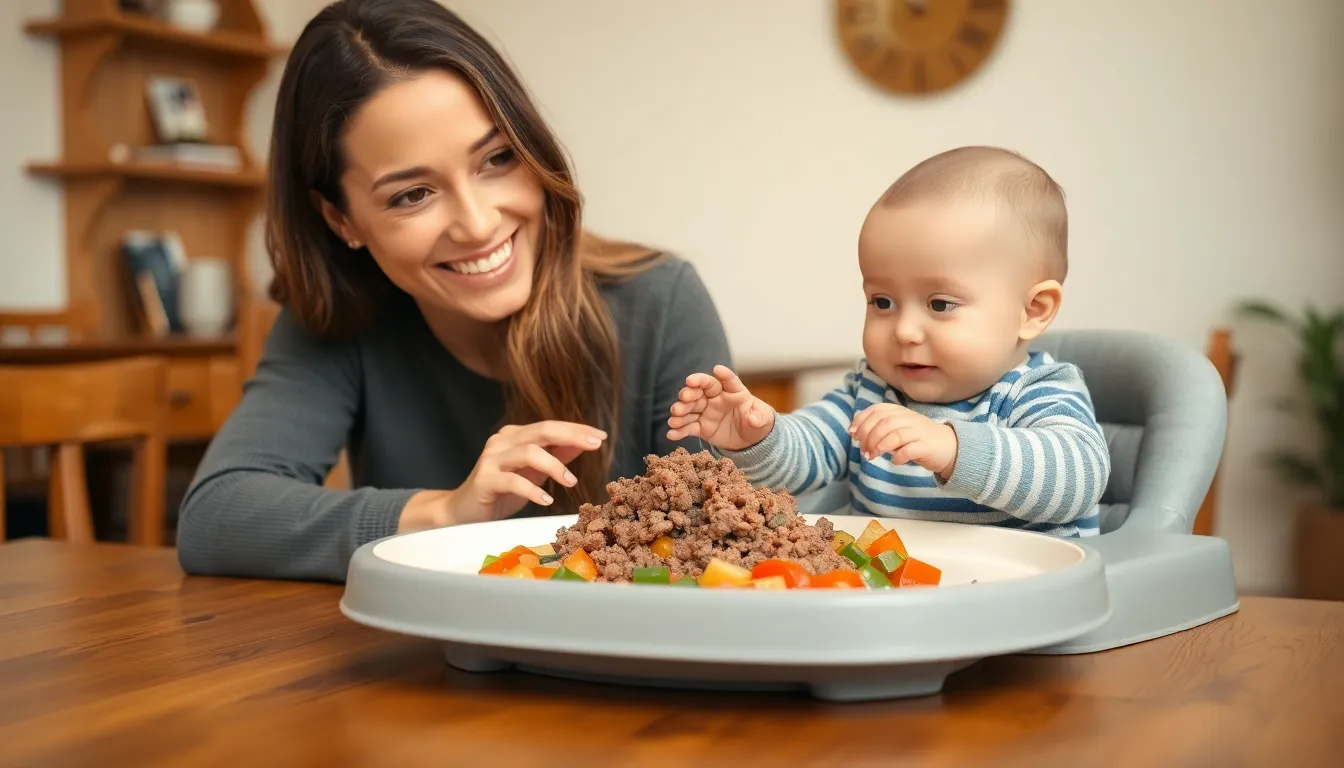
When it comes to introducing solids to little ones, ground beef might not be the first food that springs to mind. But why not? It’s versatile, packed with nutrients, and let’s face it—who doesn’t love a good meatball? Ground beef can be a fun and exciting way to kick off baby-led weaning. Not only does it offer a delightful texture for tiny hands, but it also makes mealtime a little less bland for parents tired of pureed peas.
Understanding Baby Led Weaning
Baby-led weaning (BLW) offers an alternative approach to introducing solid foods. This method encourages babies to feed themselves with minimal intervention. Parents often find this technique fosters independence and self-regulation in their little ones.
BLW emphasizes whole foods, including nutrient-dense options like ground beef. Ground beef provides essential proteins, iron, and vitamins crucial for a child’s growth. These nutrients contribute to healthy brain development and physical growth.
Parents should ensure ground beef is fully cooked and finely crumbled. This prevents choking hazards while allowing babies to grasp pieces easily. Ground beef’s texture appeals to many infants, encouraging exploration and experimentation at mealtime.
BLW promotes family mealtimes, where babies can share in the eating experience. Offering ground beef alongside vegetables and grains creates a balanced meal. It exposes babies to various flavors and textures, enhancing their palate.
Nutrition experts recommend facing a few considerations. Ground beef originates from several animals, so parents must select high-quality options. Grass-fed beef, for instance, often contains higher omega-3 fatty acids and lower saturated fats than conventional beef.
When incorporating ground beef into the diet, timing matters. Babies around six months old typically show readiness for solids, but individual development varies. Parents should monitor their baby’s cues to ensure readiness while creating a positive feeding environment.
Benefits of Ground Beef in Baby Led Weaning
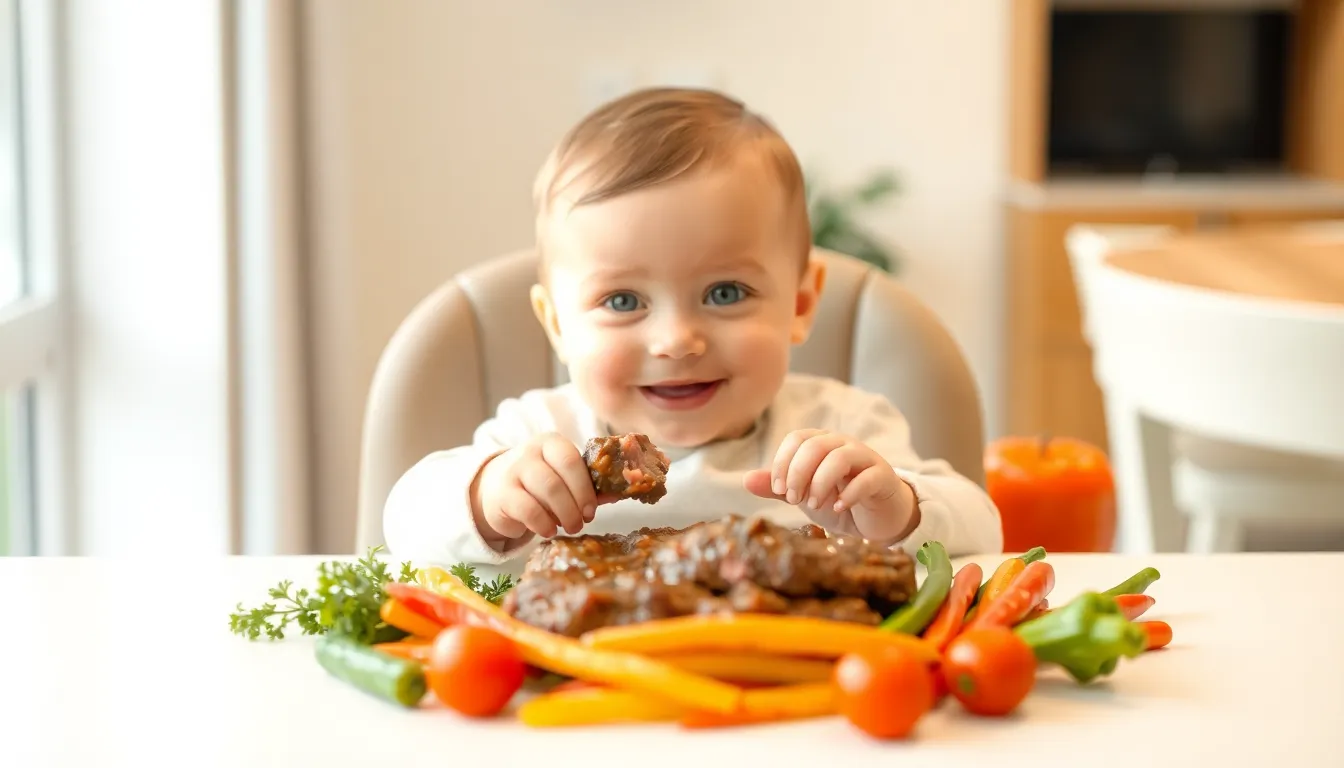
Ground beef offers a range of benefits that cater to the nutritional needs of growing babies during the weaning process.
Nutritional Value of Ground Beef
Ground beef is a powerful source of protein and iron, integral for healthy growth and development. One serving contains approximately 22 grams of protein, aiding muscle development and tissue repair. With a rich supply of essential vitamins, including B12 and zinc, ground beef supports cognitive function and immune health. Parents may consider using grass-fed options, which contain higher omega-3 fatty acids and lower unhealthy fats. Ground beef also has a high caloric density, making it an excellent choice for babies who need energy for their active exploration.
Texture and Taste Appropriateness
Texture plays a significant role in baby-led weaning, and ground beef provides an ideal option. Finely crumbled beef offers a tender yet manageable consistency, allowing little hands to grasp and enjoy it. Additionally, the rich flavor of ground beef appeals to a baby’s developing palate. Babies often show interest in bold tastes; ground beef can serve as a foundation for diverse flavors when paired with vegetables or grains. For those cautious about choking hazards, ensuring ground beef is properly cooked and crumbled enhances safety while enriching the mealtime experience.
How to Prepare Ground Beef for Babies
Preparing ground beef for babies involves careful cooking and seasoning to ensure safety and flavor. Understanding appropriate methods and options helps create an enjoyable mealtime experience.
Cooking Methods
Cooking ground beef properly is essential for baby-led weaning. Sautéing in a skillet remains a popular method, allowing for even cooking and a fine crumble. Boiling or steaming can also provide a softer texture, suitable for younger babies. Slow cooking produces tender beef that easily breaks apart, ensuring smooth bites. Using a meat thermometer guarantees an internal temperature of 160°F, confirming it’s fully cooked. Ground beef should crumble easily to prevent choking. Blending the meat into smaller pieces enhances graspability for little hands.
Safe Seasoning Options
Seasoning ground beef introduces enticing flavors while maintaining safety. Avoiding excessive salt is crucial. Instead, opt for herbs like oregano and basil for mild flavors. Garlic powder adds a gentle kick without overwhelming a baby’s palate. Other safe choices include cumin and paprika, which offer warmth and depth. Spice blends should remain simple; using just one or two at a time allows for gradual flavor exploration. Always ensure that any seasoning introduced aligns with the baby’s age and dietary requirements, supporting healthy development while expanding taste preferences.
Tips for Introducing Ground Beef
Introducing ground beef in baby-led weaning requires thoughtful preparation and attention to detail. Ensuring the beef is safe and suitable for your baby will enhance the mealtime experience.
Portion Sizes
Portion sizes for babies should be small and manageable. Consider offering approximately one to two tablespoons of finely crumbled ground beef per meal. Adjustments can depend on the baby’s appetite and developmental stage. Serve the meat paired with vegetables or grains to ensure a balanced meal. Gradually increase the portion size as the baby becomes comfortable with the texture and flavor. Monitor the baby’s responses to determine if the adjustments are appropriate.
Monitoring Allergies and Reactions
Monitoring for allergies or adverse reactions is crucial when introducing new foods. Introduce ground beef when the baby shows readiness for solids, typically around six months of age. Start with small amounts and watch for any signs of irritability or digestive issues. Symptoms like rash, vomiting, or diarrhea may indicate a sensitivity. If any adverse reactions occur, consult a pediatrician to discuss next steps. Keeping a food diary can help track what the baby eats and any reactions that follow.
Introducing ground beef into a baby’s diet through baby-led weaning can be a rewarding experience for both parents and children. Its rich nutritional profile supports essential growth and development while encouraging babies to explore new textures and flavors. By focusing on safe preparation methods and mindful portion sizes, parents can create a positive mealtime environment that fosters independence and self-regulation.
With careful monitoring for allergies and a gradual introduction of this versatile food, families can enjoy the benefits of ground beef, making mealtimes more exciting and nutritious. Embracing this approach not only enhances a baby’s culinary journey but also strengthens family bonds during shared meals.